
Weight Changes and Cognitive Function in Elderly: NHANES Study
This study examined the relationship between adult weight changes and cognitive function in older adults using data from the National Health and Nutrition Examination Survey (NHANES). Researchers analyzed 5097 participan
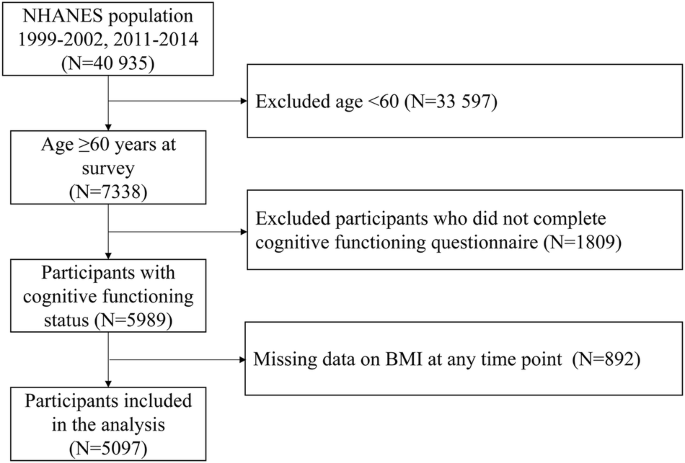
Cognitive decline remains a significant public health concern within aging populations, yet the specific impact of body weight changes on cognitive abilities has yielded inconsistent findings across previous research. This investigation sought to clarify the association between weight trajectories during adulthood and cognitive function in later life, providing relevant data for metabolic and geriatric research contexts.
The researchers utilized data from the National Health and Nutrition Examination Survey (NHANES), a comprehensive national health survey. A total of 5097 participants aged 60 years or older were included in the analysis, with weight information recalled at young and middle adulthood compared to survey time. Absolute weight change was categorized into five distinct groups: weight loss of at least 2.5 kg, weight change within 2.5 kg serving as the reference group, weight gain of at least 2.5 kg but less than 10.0 kg, weight gain of at least 10 kg but less than 20.0 kg, and weight gain of at least 20.0 kg.
Cognitive function was assessed using the Digit Symbol Substitution Test (DSST), a standard measure of processing speed and attention. Logistic regression models adjusted for relevant covariates were employed to compute odds ratios (ORs) and 95% confidence intervals (CIs) for the association between weight changes and cognitive function outcomes. The study aimed to determine whether specific patterns of weight gain or loss during adulthood predict cognitive performance in older age.
The findings indicate that participants with small to moderate weight gain experienced a decline in cognitive function compared to those with minimal weight change. However, the data presented suggests that extreme weight loss was not associated with adverse cognitive outcomes in this cohort. These results contribute to the understanding of metabolic health and cognitive aging, though they do not establish causality.
This research is intended for laboratory and academic use only. The authors note limitations inherent in observational studies, including reliance on self-reported historical weight data and potential confounding variables. Results should not be interpreted as medical advice or clinical recommendations for therapeutic interventions. Further longitudinal studies are required to confirm these associations.