
Synchronized Proinsulin Trafficking Reveals Delayed Golgi Export Accompanies Beta-Cell Secretory Dysfunction
This report utilized the synchronous protein trafficking system, RUSH, to evaluate proinsulin transit through the secretory pathway in primary beta-cells. The authors demonstrate that proinsulin trafficking is impeded at
The pancreatic islet beta-cell's preference for release of newly synthesized insulin requires careful coordination of insulin exocytosis with sufficient insulin granule production to ensure that insulin stores exceed peripheral demands for glucose homeostasis. Thus, the cellular mechanisms regulating insulin granule production are critical to maintaining beta-cell function.
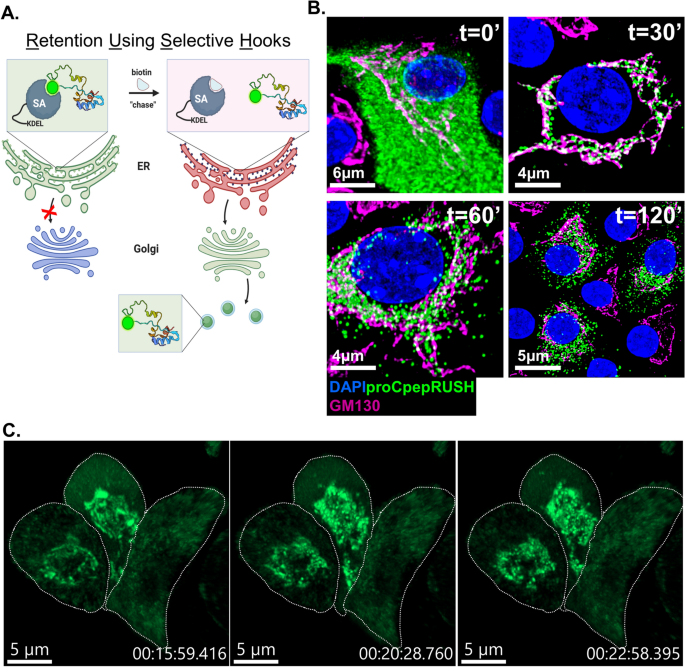
In this report, researchers utilized the synchronous protein trafficking system, RUSH, in primary beta-cells to evaluate proinsulin transit through the secretory pathway leading to insulin granule formation. This approach allows for real-time tracking of protein movement without disrupting normal cellular processes, providing a robust method to study intracellular dynamics.
Using both a rodent dietary and genetic model of hyperglycemia and beta-cell dysfunction, the authors show that proinsulin trafficking is impeded at the Golgi and coincides with the decreased appearance of nascent insulin granules at the plasma membrane. Ultrastructural analysis of beta-cells from diabetic leptin receptor deficient mice revealed gross morphological changes in Golgi structure, including shortened and swollen cisternae, and partial Golgi vesiculation, which are consistent with defects in secretory protein export.
Collectively, this work highlights the utility of the proCpepRUSH reporter in studying proinsulin trafficking dynamics and suggests that altered Golgi export function contributes to beta-cell secretory defects in the pathogenesis of Type 2 diabetes. These findings provide mechanistic insight into how metabolic stress impacts insulin processing at the cellular level.
The study emphasizes the importance of maintaining proper Golgi architecture for efficient insulin secretion. While these results advance understanding of beta-cell physiology, they should be interpreted within the context of rodent models and do not constitute clinical recommendations for human disease management.