
Molecular Recognition of an Acyl-Peptide Hormone and Activation of Ghrelin Receptor
Ghrelin requires acylation to bind and activate the ghrelin receptor in the brain, initiating appetite. This paper presents cryo-EM structures of the Gq-coupled receptor bound to ghrelin and the synthetic agonist GHRP-6.
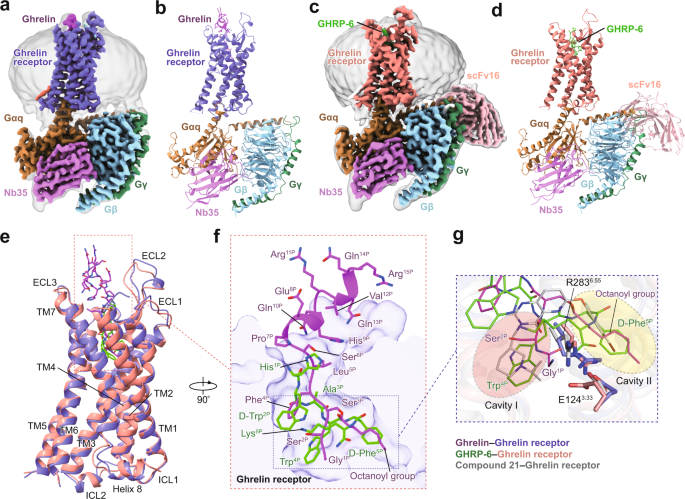
Ghrelin is a gastric peptide hormone that regulates energy balance by stimulating appetite through activation of the ghrelin receptor in the brain. The acylation of this peptide is essential for its biological activity, as unacylated forms cannot effectively bind to their target receptors. Understanding the molecular mechanisms underlying this interaction provides valuable insights for metabolic research and potential therapeutic interventions targeting hunger regulation.
The authors employed cryo-electron microscopy to determine high-resolution structures of the Gq-coupled ghrelin receptor in complex with both native ghrelin and the synthetic agonist GHRP-6. This structural approach allows researchers to visualize the precise spatial arrangement of amino acid residues involved in ligand binding and receptor activation, offering a detailed view of the molecular interface between the hormone and its receptor.
The study reveals how the acylated peptide hormone is recognized by the receptor, highlighting specific interactions that facilitate signal transduction. The structural data demonstrates distinct conformational changes induced by different ligands, which may explain variations in potency and efficacy observed in functional assays. These findings contribute to a deeper understanding of the molecular basis of ghrelin signaling pathways.
It is important to note that this research focuses on fundamental molecular mechanisms rather than clinical applications. The structures presented are intended for use in drug design and further mechanistic studies within laboratory settings. Researchers should interpret these findings as structural data without extrapolating to therapeutic outcomes or medical recommendations.