
Ghrelin System Role in Cocaine-Motivated Behaviors via Adrenergic β1 Receptors
This study demonstrates that ghrelin elevation by cocaine drives maintenance and reinstatement of self-administration, with peripheral adrenergic β1 receptor blockade attenuating these effects.
Cocaine addiction remains a significant medical and public health concern. Despite extensive research efforts over the past decades, the development of effective pharmacotherapies for cocaine use disorder has largely failed. This clinical stagnation may stem from an insufficient understanding of the complex biological mechanisms underlying the pathophysiology of this disorder. Recent investigations into peripheral neuroendocrine systems have identified potential targets that could bridge this gap in therapeutic development.
The authors investigated the involvement of the ghrelin system in cocaine-motivated behaviors, specifically focusing on the role of adrenergic action at peripheral β1 receptors. The study utilized behavioral paradigms including self-administration and reinstatement models to assess the impact of ghrelin manipulation on cocaine-seeking behavior in animals with a history of drug use.
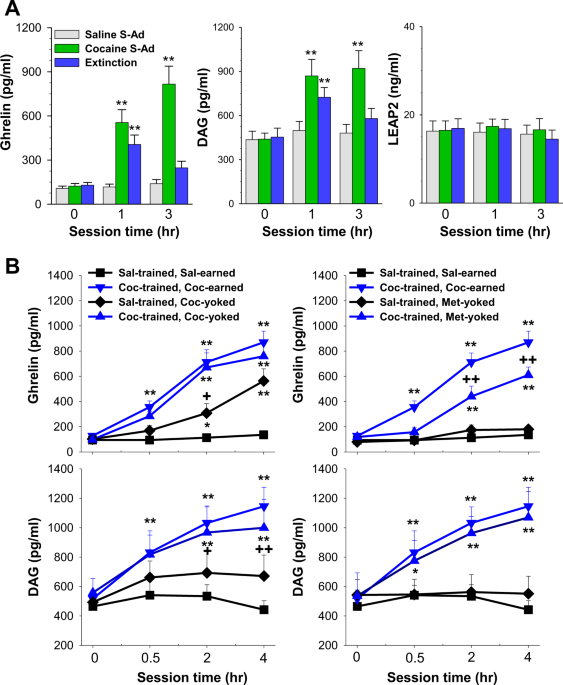
Key findings indicate that elevation of ghrelin by cocaine plays a critical role in maintaining cocaine self-administration and reinstating cocaine-seeking motivated by cocaine-conditioned stimuli. Acquisition of cocaine-taking behavior was associated with the acquisition of stimulatory effects of cocaine by conditioned stimuli on ghrelin secretion, alongside upregulation of ghrelin receptor mRNA levels in the ventral tegmental area (VTA). Furthermore, blockade of ghrelin signaling using JMV2959, a selective ghrelin receptor antagonist, dose-dependently inhibited reinstatement of cocaine-seeking triggered by either cocaine or yohimbine in behaviorally extinguished animals.
Additional experiments demonstrated that JMV2959 pretreatment also inhibited brain stimulation reward (BSR) and cocaine-potentiated BSR maintained by optogenetic stimulation of VTA dopamine neurons in DAT-Cre mice. Notably, blockade of peripheral adrenergic β1 receptors using atenolol potently attenuated the elevation in circulating ghrelin induced by cocaine and inhibited both cocaine self-administration and reinstatement triggered by cocaine.
These findings demonstrate that the endogenous ghrelin system plays an important role in cocaine-related addictive behaviors. The data suggest that manipulating and targeting this system may be viable for mitigating cocaine use disorder. However, these results are derived from preclinical animal models and do not constitute medical advice or clinical recommendations for human treatment. Further research is required to validate these mechanisms in human subjects before therapeutic applications can be considered.