
Water Supplementation and Glucose Reduction in High Copeptin Adults
Elevated copeptin, a surrogate marker of vasopressin, is linked to low water intake and increased diabetes risk. Water supplementation significantly lowers both fasting plasma copeptin and glucose in habitual low-drinker
This study investigates the potential mechanisms linking elevated copeptin levels to glucose metabolism in adults with high baseline values. Copeptin serves as a stable surrogate marker for vasopressin, which plays a critical role in water balance and stress response pathways. Understanding these connections is relevant for metabolic research contexts where fluid status may influence glycemic control.
The researchers enrolled thirty-one healthy adults exhibiting elevated copeptin levels, defined as greater than 10.7 pmol·L−1 for men and 6.1 pmol·L−1 for women. Participants also demonstrated low urine volume (< 1.5 L over 24 hours) and high urine osmolality (> 600 mOsm·kg−1). The intervention protocol involved daily water supplementation of 1.5 liters administered over a six-week period.
Key findings indicate that water intake significantly reduced fasting plasma copeptin and glucose concentrations in this cohort. Notably, the decrease in fasting plasma copeptin was strongly associated with reductions in fasting adrenocorticotropic hormone (ACTH) levels (r = 0.76, p < 0.001). Additionally, a moderate association was observed between copeptin reduction and changes in fasting glucagon levels (r = 0.39, p = 0.03).
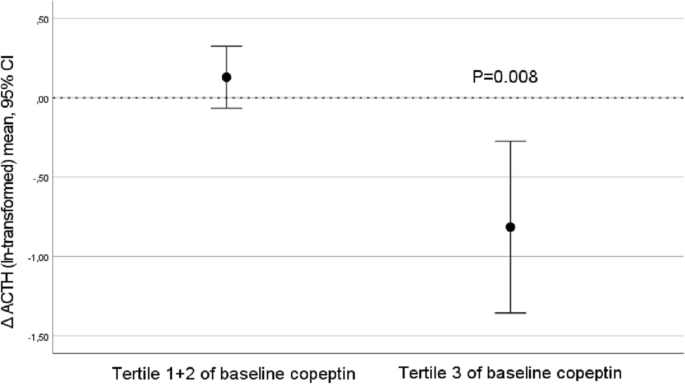
When stratified by baseline copeptin tertiles, the glucose-lowering effect appeared most pronounced in participants with the highest initial copeptin values. Median fasting ACTH levels decreased from 13.0 pmol L−1 to 7.7 pmol L−1 in this top group (p = 0.007), whereas no significant reduction occurred in lower tertiles. These results suggest that water-induced glucose reduction may be partly mediated through modulation of hypothalamic–pituitary–adrenal axis activity.
The study was conducted under research-use-only protocols, and these findings should not be interpreted as medical advice or clinical recommendations for therapeutic use. The authors note that further investigation is required to fully elucidate the physiological mechanisms underlying these observations. ClinicalTrials.gov registration number NCT03574688.