
Exercise Delays Ovarian Aging in Humans and Mice
Cross-sectional analyses of more than 150,000 participants show an association between higher physical activity levels and delayed menopause. In mice, physical activity can delay ovarian aging; adiponectin knockout atten
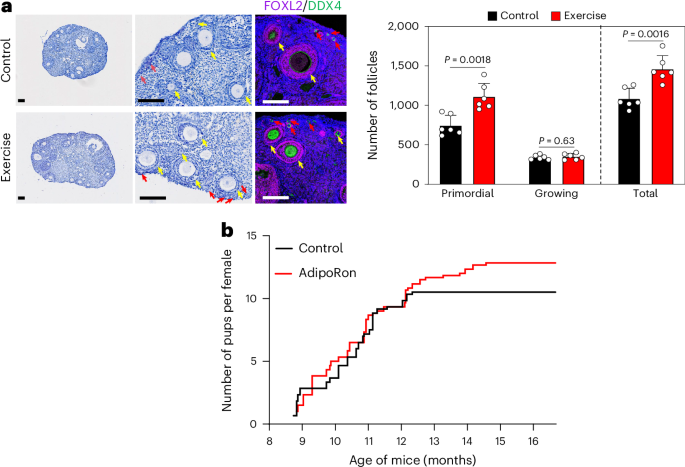
Recent research investigates the impact of physical activity on reproductive lifespan, a critical area for understanding metabolic health and aging in laboratory models. Delayed onset of menopause is significant for both human longevity studies and translational research into ovarian function preservation.
The study employed cross-sectional analyses involving over 150,000 participants to establish population-level trends regarding physical activity and menopausal timing. Complementary murine models were utilized to determine mechanistic pathways underlying these observed associations in vivo.
Key findings indicate a strong correlation between higher physical activity levels and delayed menopause onset in human cohorts. In mouse models, regular physical activity demonstrated the capacity to delay ovarian aging processes. However, genetic manipulation of adiponectin levels attenuated this protective effect, suggesting a specific molecular pathway involved in mediating these benefits.
These results position physical activity as a viable behavioral intervention for delaying reproductive aging. Adiponectin emerges as a potential molecular target for future therapeutic strategies aimed at preserving ovarian function. The study underscores the importance of lifestyle factors in metabolic and reproductive health contexts.